From Passion to Perfection: 3 Pillars to Becoming a Master Landscape Photographer
In the world of landscape photography, there is a vast ocean between taking a "nice photo" and creating a masterpiece that stops someone in their tracks. We live in a visual age where everyone has a camera, but few have the vision.
The Journey of a Quarter-Century
I didn’t reach this level overnight. My journey has spanned 25 years of relentless pursuit, evolving from a curious beginner to a renowned global ambassador for leading brands. Today, my mission has expanded: I am a dedicated online educator and tutor, helping photographers around the world find their own voice.
People often ask how I managed to build a global reputation while maintaining a full-time day job. The answer is simple, yet demanding: I applied the very techniques I’m about to share with you. Whether I am hosting intensive field workshops or providing one-on-one online tutoring, I emphasize that success isn't about how much free time you have; it’s about the discipline and obsession you bring to the time you do have.
If you want to move beyond the amateur and become the greatest photographer you can be, you have to change your DNA. Here are the three non-negotiable pillars of my craft.
1. The Power of Total Obsession
As an educator, the first thing I look for in a student is hunger. To master this art, you must make landscape photography a complete obsession. This means absorbing the craft into your daily routine until it becomes second nature.
The Technical & The Artistic: Dive deep into the "why" behind the settings. In my workshops, we don't just talk about the Exposure Triangle; we study how light interacts with glass.
Constant Research: Spend your "downtime" watching established photographers on YouTube, listening to industry podcasts, and studying the masters.
Immersion: If you aren't shooting, you should be studying weather patterns and composition. When you eat, sleep, and breathe photography, your intuition takes over.
2. Seek Only the Extraordinary
The world doesn't need more photos of the "ordinary." To stand out, you must cultivate a discipline of selectivity: only photograph the extraordinary. Once you understand the technical process, your job is to become a curator of moments. Your audience wants to see what they can’t see for themselves.
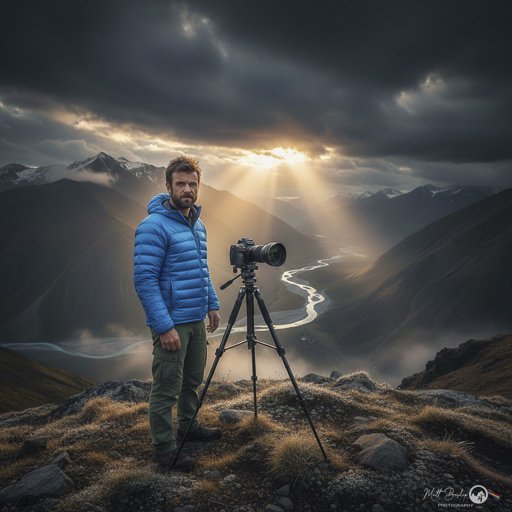
Wait for the Light: Don't settle for "okay" skies. Wait for the storm to break, the mist to roll in, or the rare glow of the golden hour.
Subject Matter: Look for the compositions that feel grand, unique, or emotionally charged.
Focus Your Lens: By concentrating only on the extraordinary, you tell your audience that your work is a premium experience. You aren't just taking pictures; you are capturing the rare pulses of the planet.
3. Precision, Finesse, and the Art of the Showcase
In our digital world, a great image is only half the battle. As a professional landscape photographer, I’ve learned that if you don't showcase your work with extreme precision and finesse, the image loses its soul. You must give your work the justice it deserves by presenting it with intent.
The Narrative Hook: Don’t just "post" an image with a list of settings. Use interesting, evocative wording to drag your audience into the frame with you. Describe the bite of the wind, the silence of the valley, or the three-day wait for that specific light. When you provide context and story, you aren't just showing a picture; you are providing an experience that captures the imagination.
Intelligent Distribution & Niche Targeting: Simply casting your image into the void of a general feed is rarely enough. Use social media platforms and online communities intelligently. I focus on finding niche groups—whether they are specialized Facebook communities or dedicated photography forums—that truly appreciate the specific subject or style of the work. Targeting these specific audiences is how you build a loyal following that values the "extraordinary" over the "common."
Platform-Specific Finesse: Treat each platform differently. What works for a high-impact visual on one app isn’t what a curated portfolio or a technical photography forum needs. Tailor your presentation and your wording to the "vibe" of the specific community you are speaking to.
The Tangible Medium: I always encourage my students to offer their work as high-quality prints. There is a specific magic in seeing a photograph move from a screen to a physical medium. When you offer a print, you are transitioning from a digital creator to a fine artist, offering a permanent piece of the extraordinary for someone’s home.